


Executive Coaching Explained
Price range: $49 through $197

★★★★★ (4.89)
Loved by our amazing community
How to build leaders who actually develop others, explained framework by framework across 105 pages of practical operating knowledge.
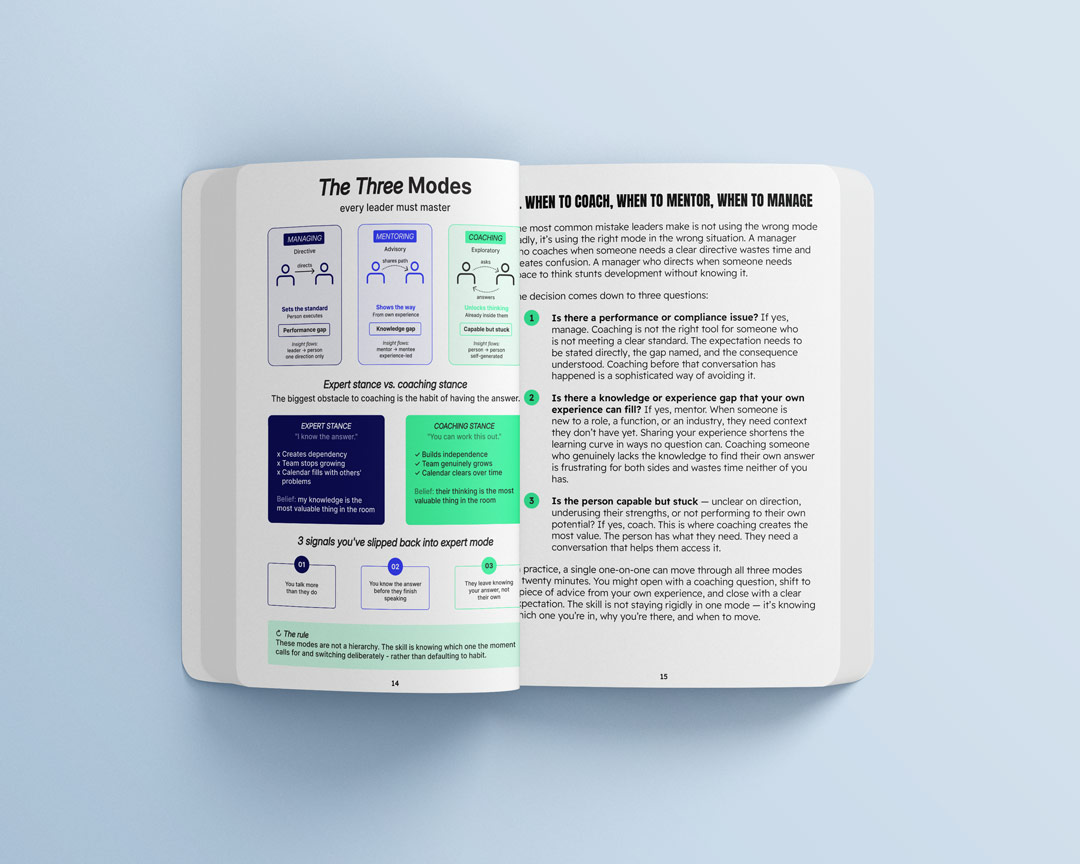
- How to coach, mentor, and manage – and when to switch between all three for maximum impact
- Master proven models including GROW, CLEAR, OSKAR, FUEL, and the Coaching Habit’s 7 questions
- Use powerful tools like the 9-Box Grid, SBI feedback model, Immunity to Change framework, and Radical Candor
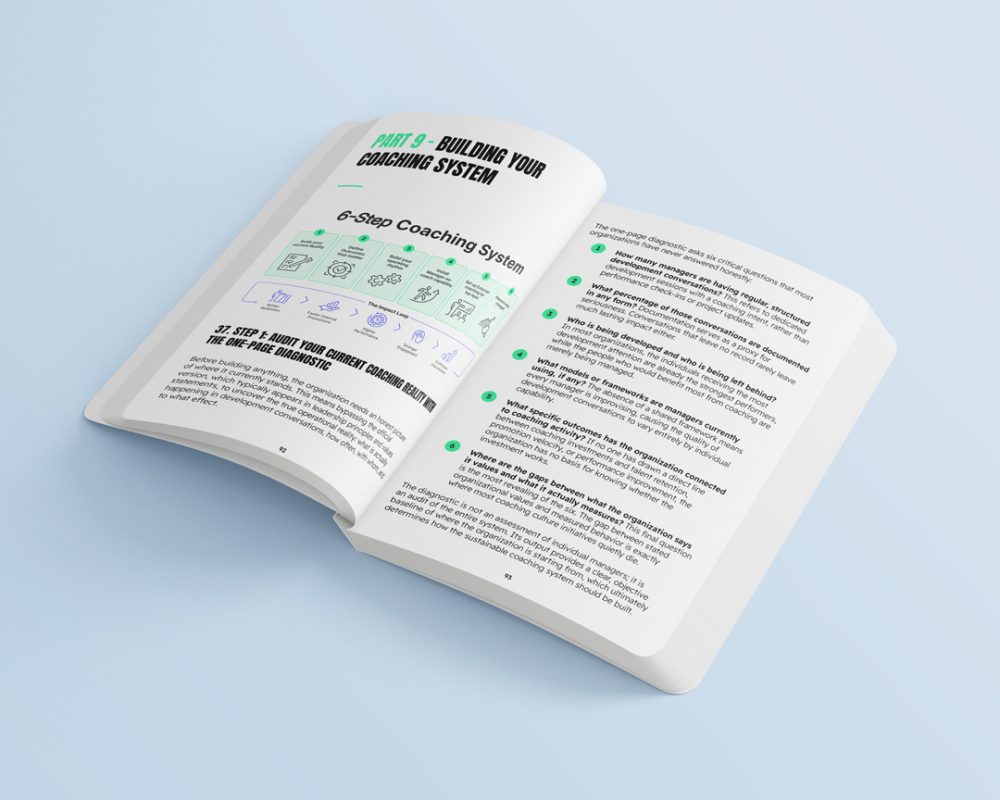
- Build an internal coaching culture that spreads top-down – with a step-by-step 6-part system to make it stick
AS FEATURED IN


Choose one of the options:
OR SAVE $4764 TODAY

 Risk-free Purchase: Full refund within 14 days
 Paddle Safe Checkout
Risk-free: Full refund within 14 days
Paddle Safe Checkout

About Executive Coaching Explained
The reason most managers develop no one isn’t a lack of good intentions. It’s that they were promoted for doing great work, handed a team, and left to improvise – never taught the actual mechanics.
This eBook closes that gap by answering the four questions that separate managers who build people from managers who just assign work: when to coach versus mentor versus manage, which model to reach for in a given conversation, how to handle the hard talks without losing them, and how to prove any of it worked. The answers run across forty-two chapters and nine parts.
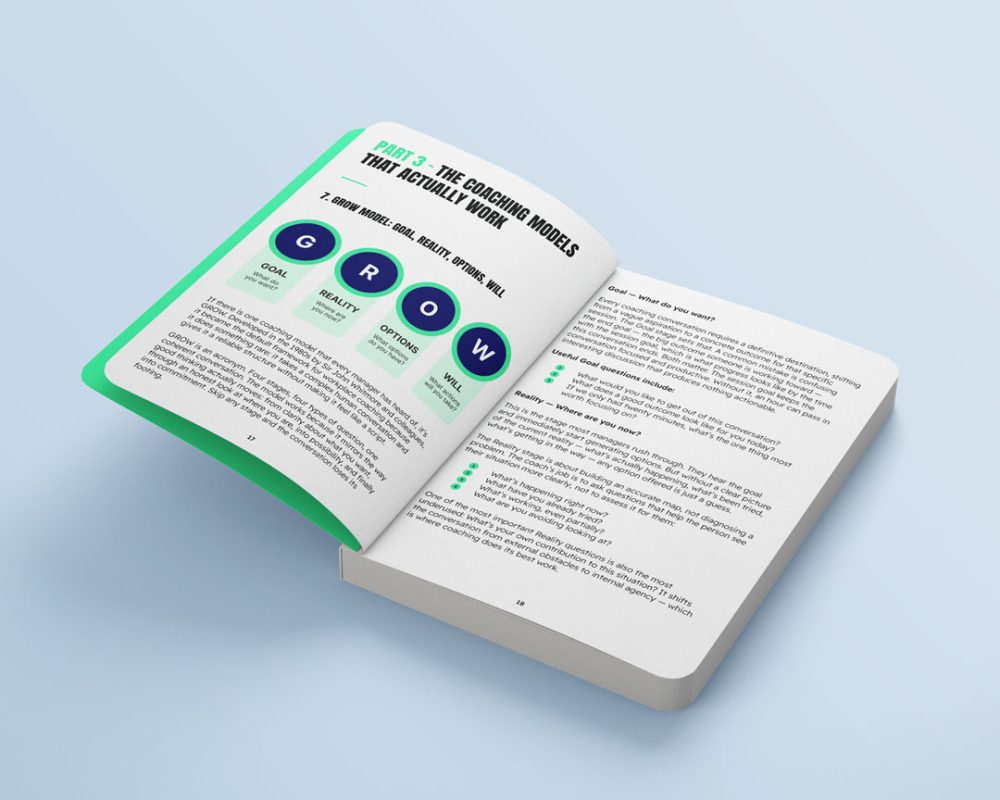
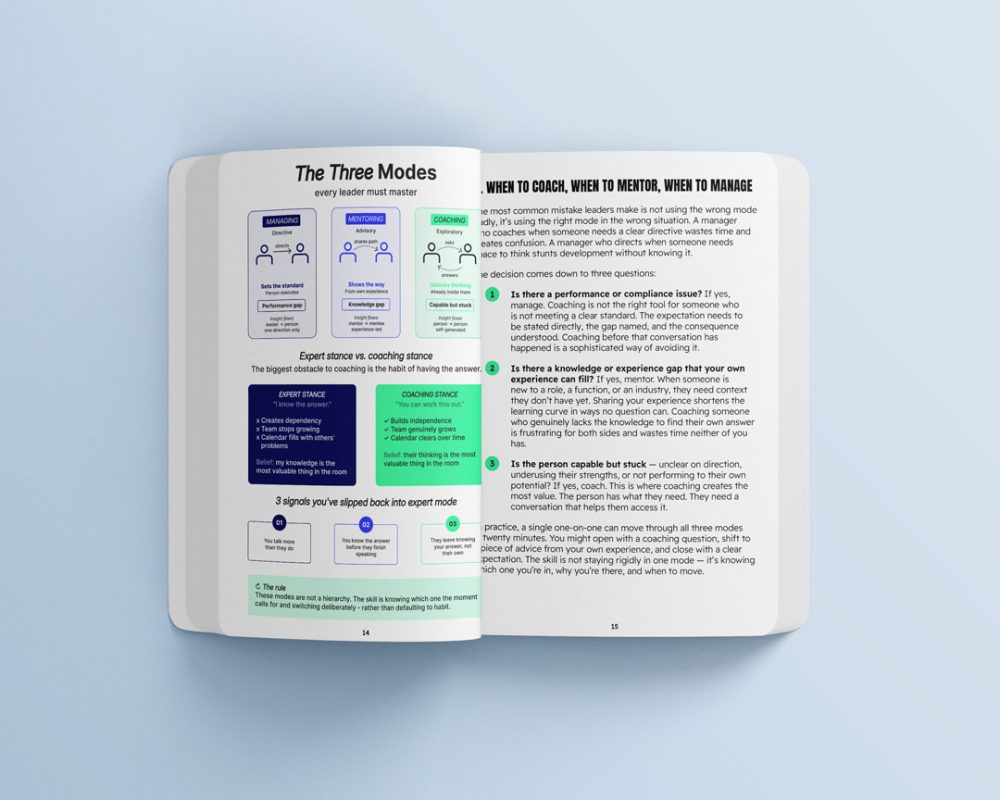
The structure moves from why coaching quietly decides who wins, into the models that actually work – GROW, CLEAR, OSKAR, and FUEL, including where each one breaks down – then into the core skills: powerful questions, real listening, the SBI feedback model, and holding silence. From there it covers the conversations managers dread most — the stalling high-performer, the low-performer you’re deciding whether to coach or cut, the report you can’t afford to lose – anchored in named frameworks like Crucial Conversations, Radical Candor, the 9-Box Grid, and Immunity to Change rather than slogans. A dedicated section covers building coaching capability across the whole bench, not just one good coach, plus when to bring in an external coach and which credentials matter. And the six-step build at the back hands you a one-page diagnostic, the outcomes worth measuring, and the metrics that turn coaching from a belief into a business case. That’s the part most coaching books skip.
Table of contents 
-
Part 1: Why Coaching Decides Who Wins
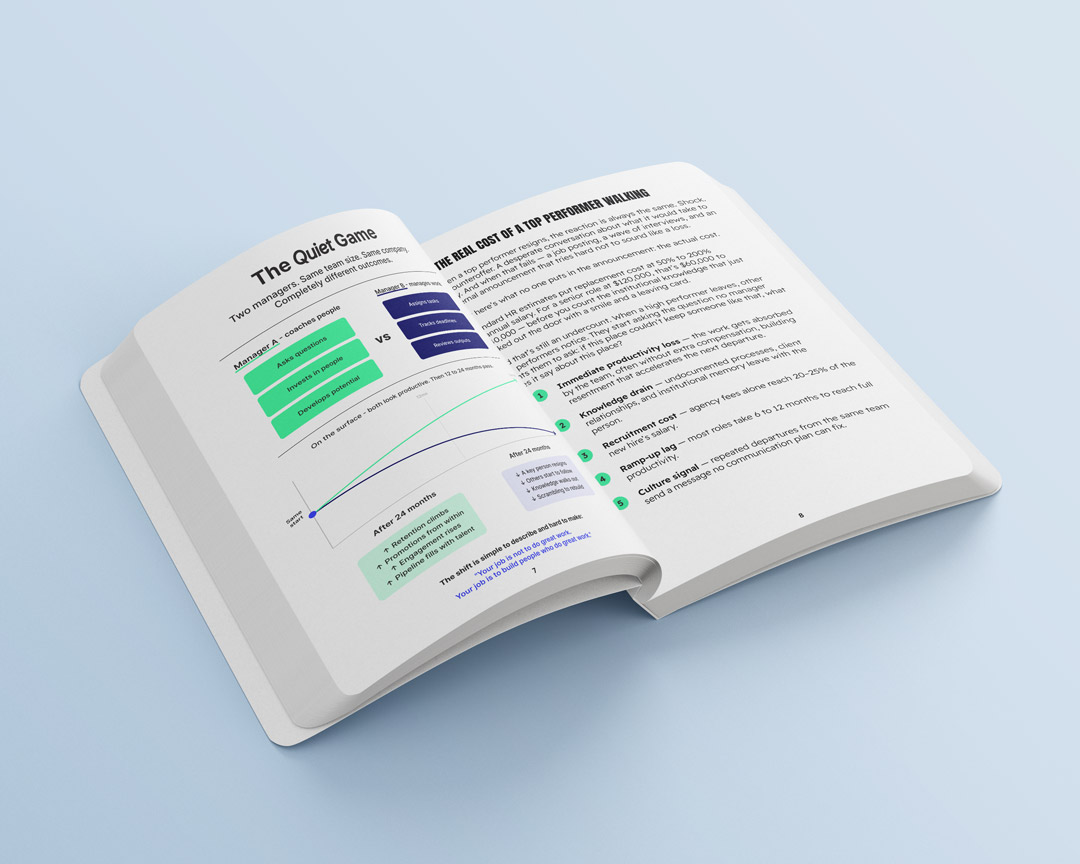
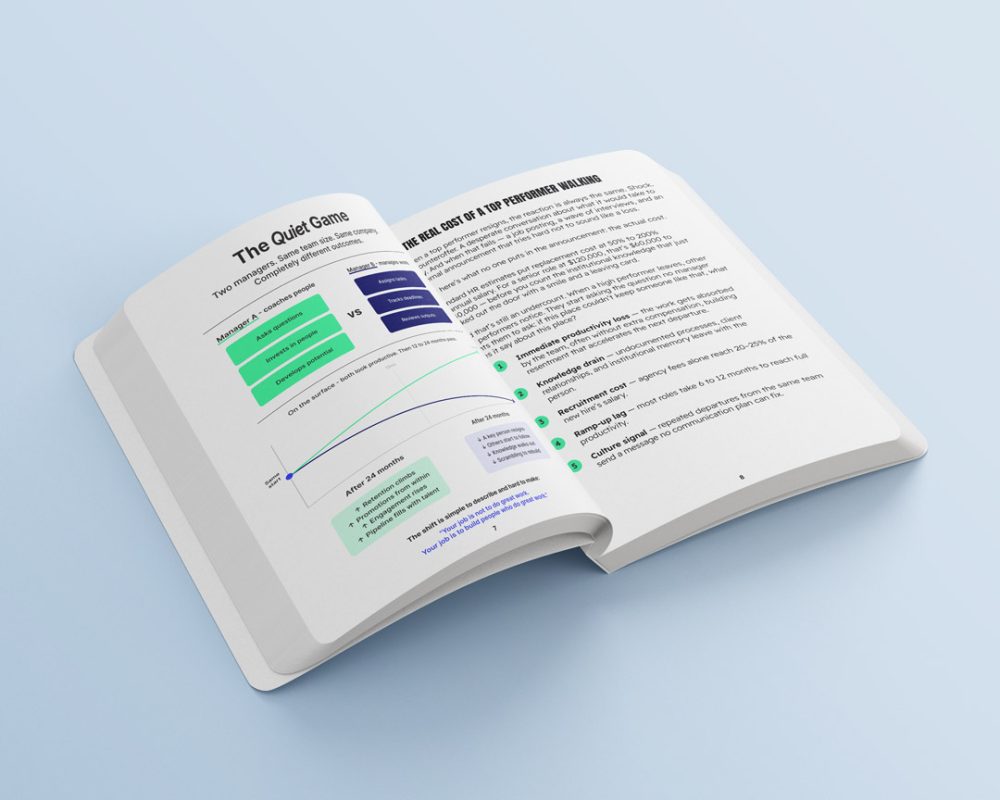
- The Quiet Game Already Being Played
- The Real Cost of a Top Performer Walking
- Why Most Managers Develop No One
- The Three Modes Defined
- When to Coach, When to Mentor, When to Manage
- The Coaching Stance vs. The Expert Stance
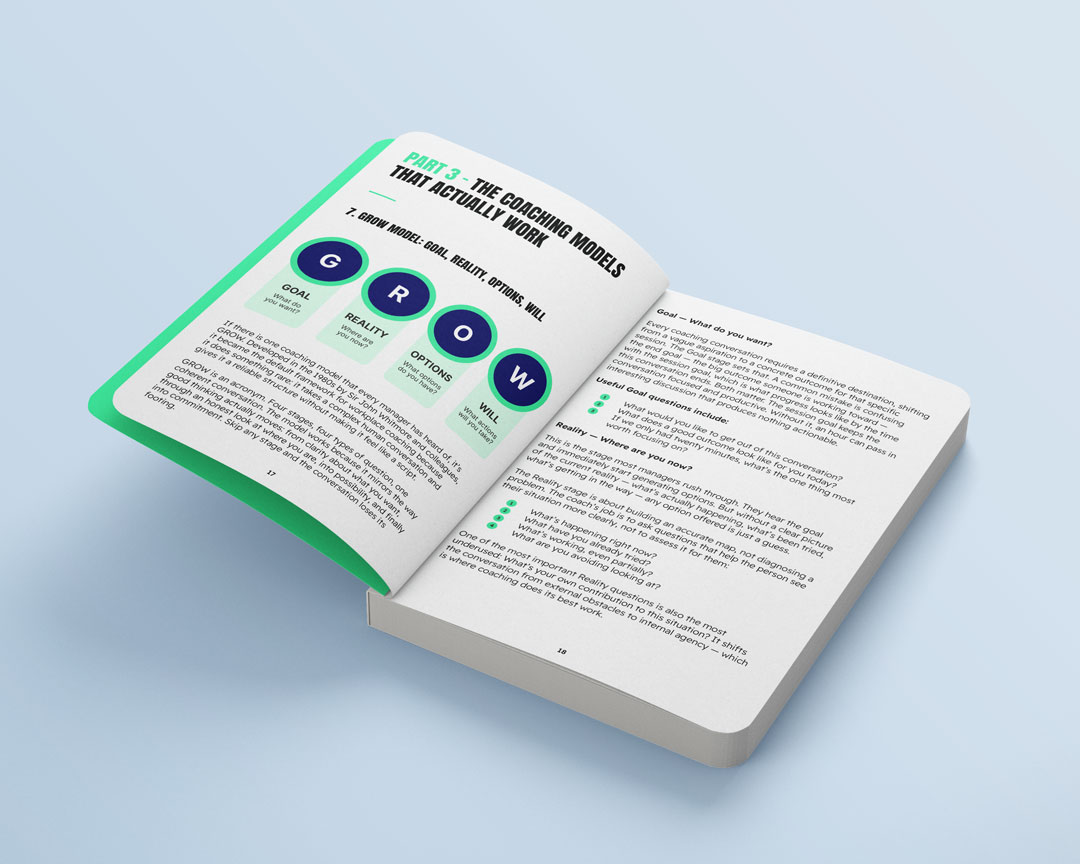
- GROW Model: Goal, Reality, Options, Will
- The Limits of GROW (And When It Breaks Down)
- CLEAR Model: Contracting, Listening, Exploring, Action, Review
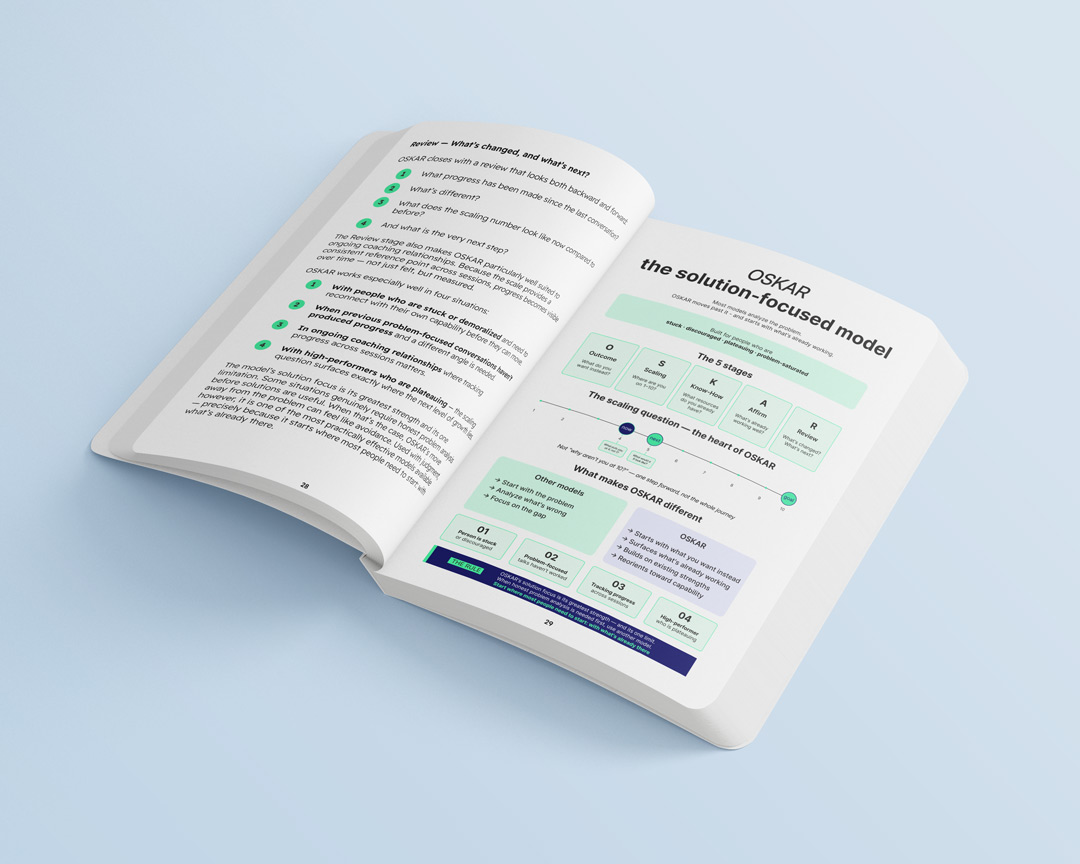
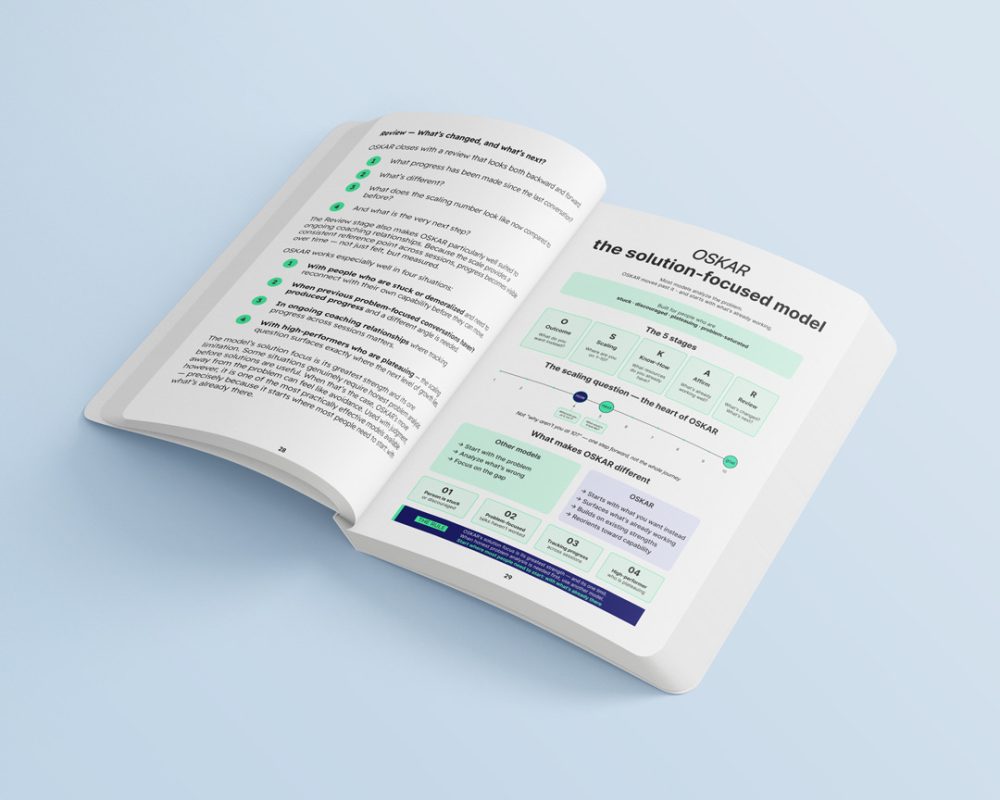
- OSKAR Model: Outcome, Scaling, Know-How, Affirm, Review
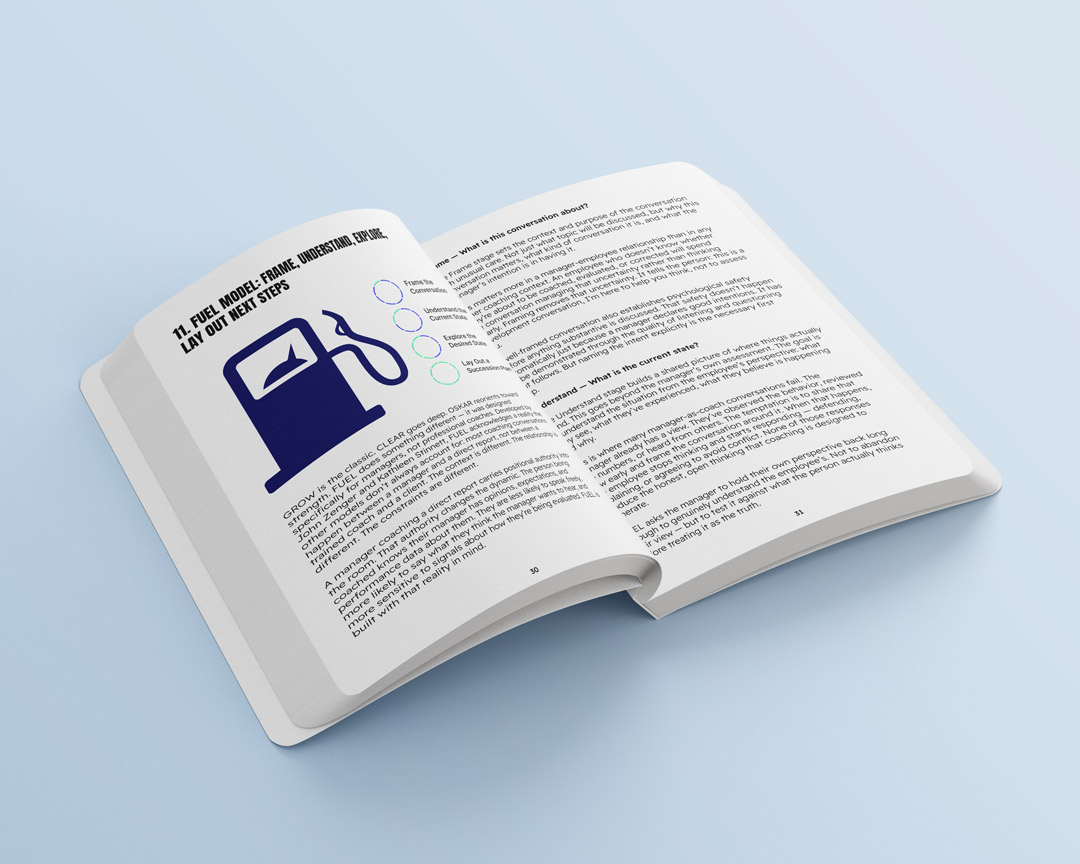
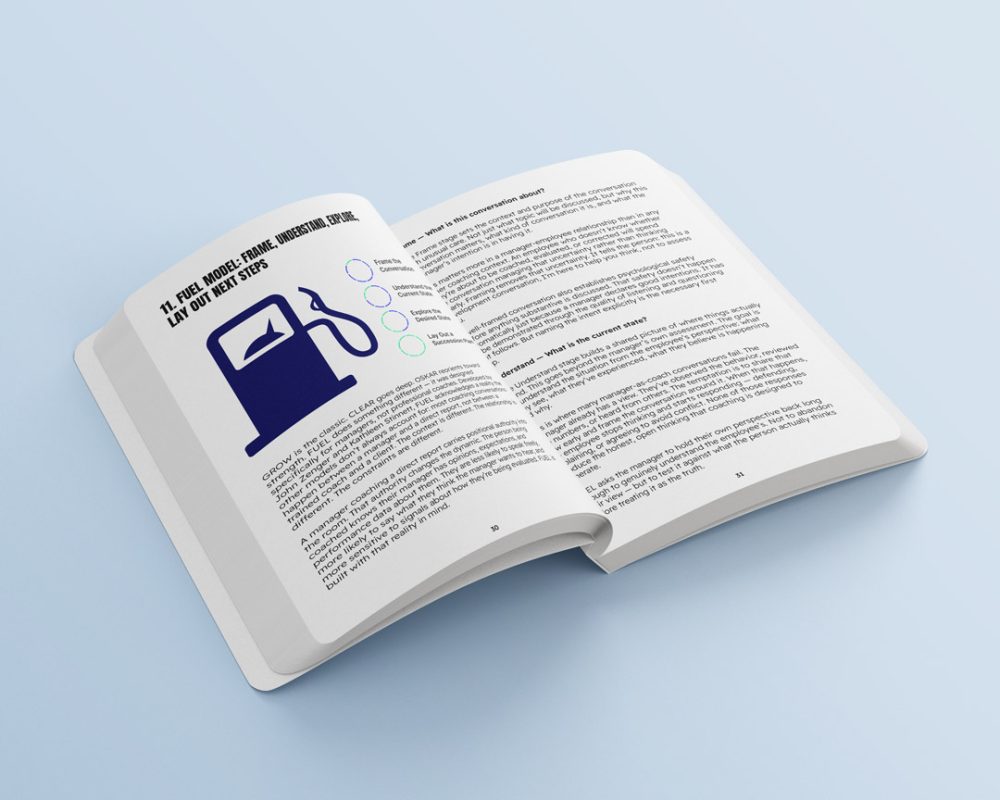
- FUEL Model: Frame, Understand, Explore, Lay Out Next Steps
- Powerful Questions: The 7 Questions From The Coaching Habit
- The 4 Levels of Listening (Otto Scharmer’s Framework)
- The SBI Model: Situation, Behavior, Impact
- Holding Silence: Why the Pause Does the Work
- The Coaching Contract: Setting the Rules of Engagement
- The Crucial Conversations Framework (Patterson, Grenny, McMillan, Switzler)
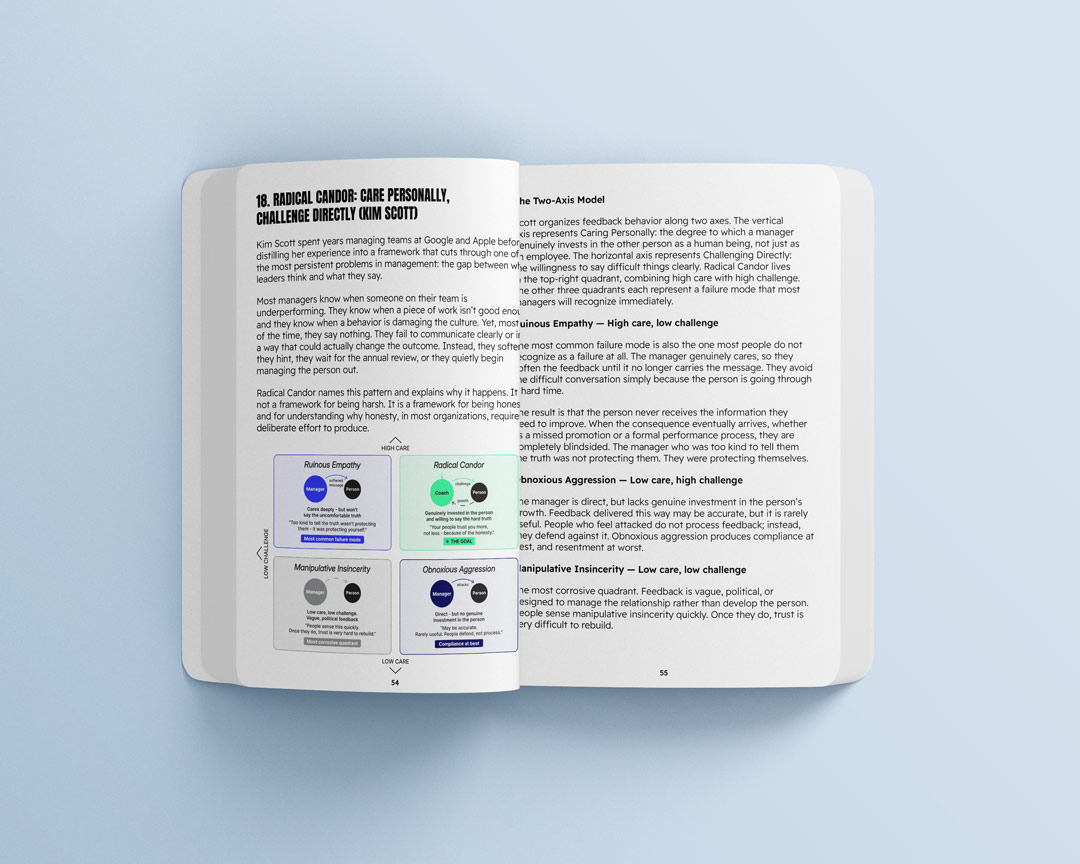
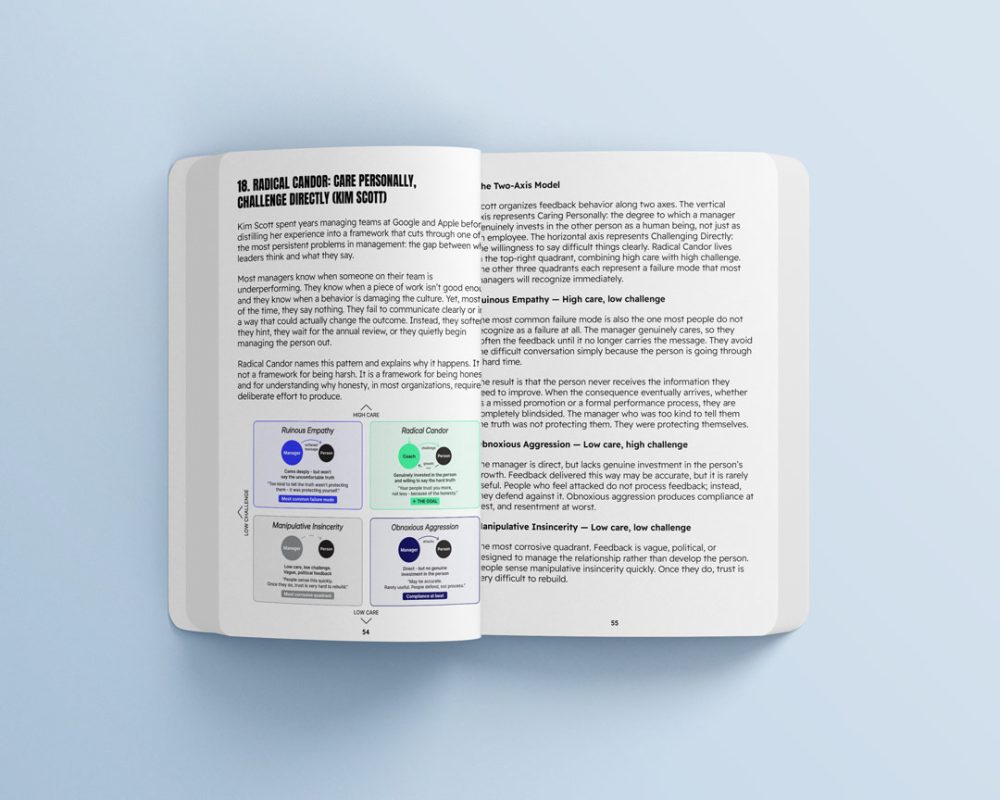
- Radical Candor: Care Personally, Challenge Directly (Kim Scott)
- The Low-Performer Conversation: Coaching or Cutting
- The High-Performer Who’s Stalling Conversation
- The Conflict Between Two Reports Conversation
- Handling Emotional Reactions Without Losing the Conversation
- The Manager-as-Coach Shift: From Boss to Developer
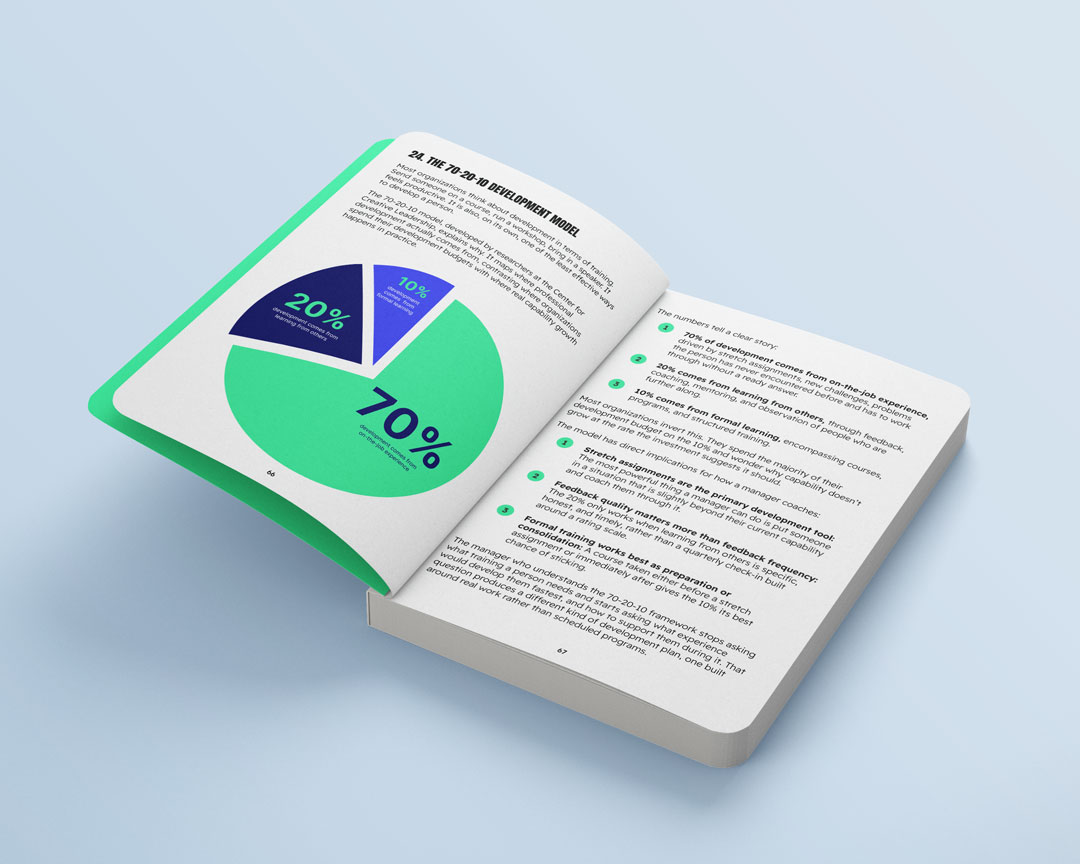
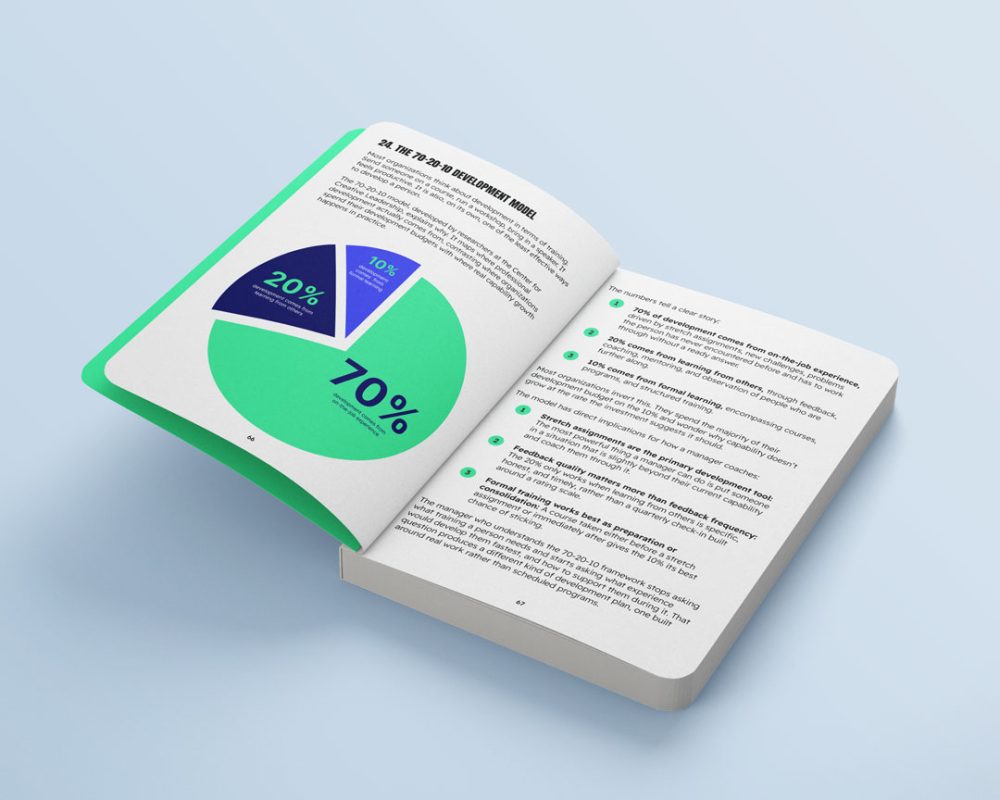
- The 70-20-10 Development Model
- Coaching Circles and Group Coaching Formats
- The Coaching Culture: How It Spreads (Or Dies) Top-Down
- Training Managers to Coach: A Realistic Rollout
- When to Hire an External Coach (And When Not To)
- Credentials That Matter: ICF, EMCC, and What to Ignore
- The Chemistry Session: How to Select the Right Coach
- Measuring ROI: How to Prove Coaching Worked
- The 9-Box Grid: Mapping Performance Against Potential
- Identifying High-Potentials (HiPos) Without Guesswork
- The Retention Conversation: Coaching the People You Can’t Afford to Lose
- Coaching the Newly Promoted: The First 90 Days in a Bigger Seat
- Immunity to Change Framework (Kegan and Lahey)
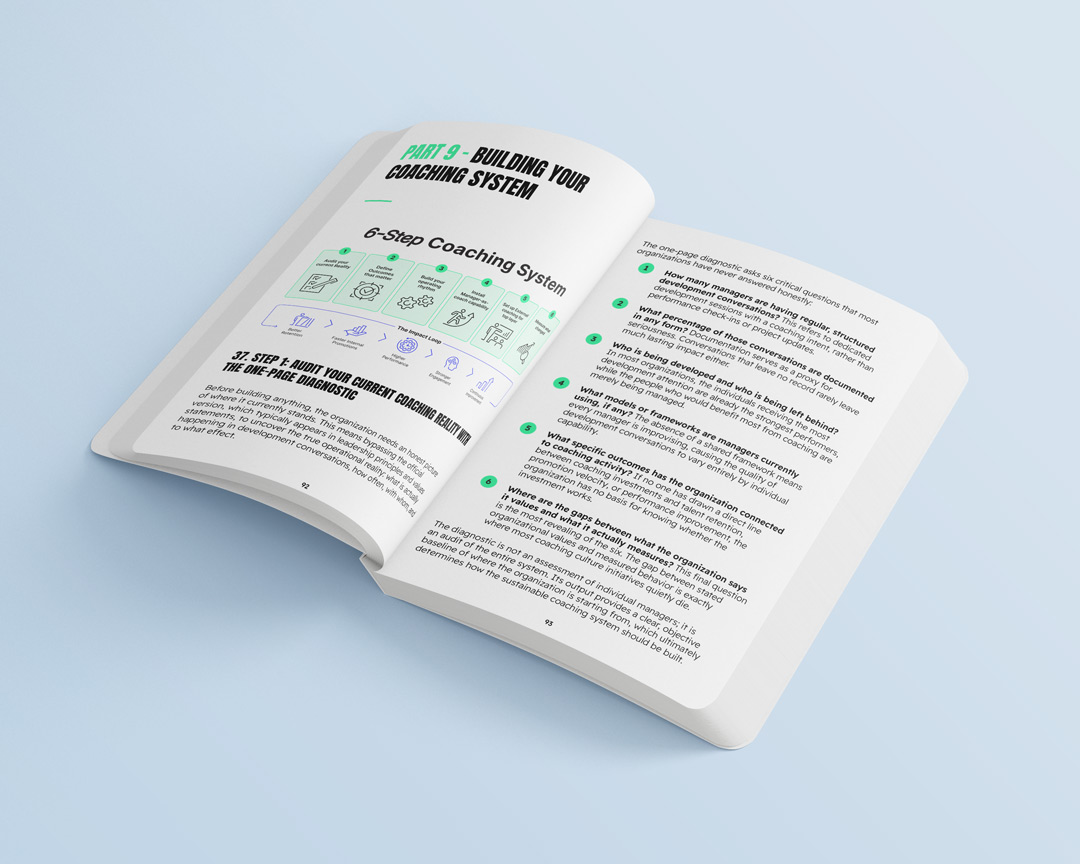
- Step 1: Audit Your Current Coaching Reality With the One-Page Diagnostic
- Step 2: Define the Coaching Outcomes That Matter (Retention, Promotion, Performance)
- Step 3: Build Your Coaching Operating Rhythm (1:1s, Skip-Levels, Reviews)
- Step 4: Install the Manager-as-Coach Capability Across Your Bench
- Step 5: Set Up External Coaching for the Top Layer
- Step 6: Measure What Changed (Retention, Promotion Velocity, Engagement)
Part 2: Coaching, Mentoring, Managing – The Three Modes
Part 3: The Coaching Models That Actually Work
Part 4: The Core Coaching Skills
Part 5: Coaching Difficult Conversations
Part 6: Building Internal Coaching Capability
Part 7: When and How to Bring In an External Coach
Part 8: Coaching for Succession and Retention
Part 9: Building Your Coaching System



69 Products Included
All Products Special
Order our bestselling business bundle now and save a whopping $4,764 compared to buying each product separately.
Get all 69 Products for just $197 
 Risk-free Purchase: Full refund within 14 days
Safe Checkout Powered by 


This is our LOWEST PRICE EVER - don’t miss out!
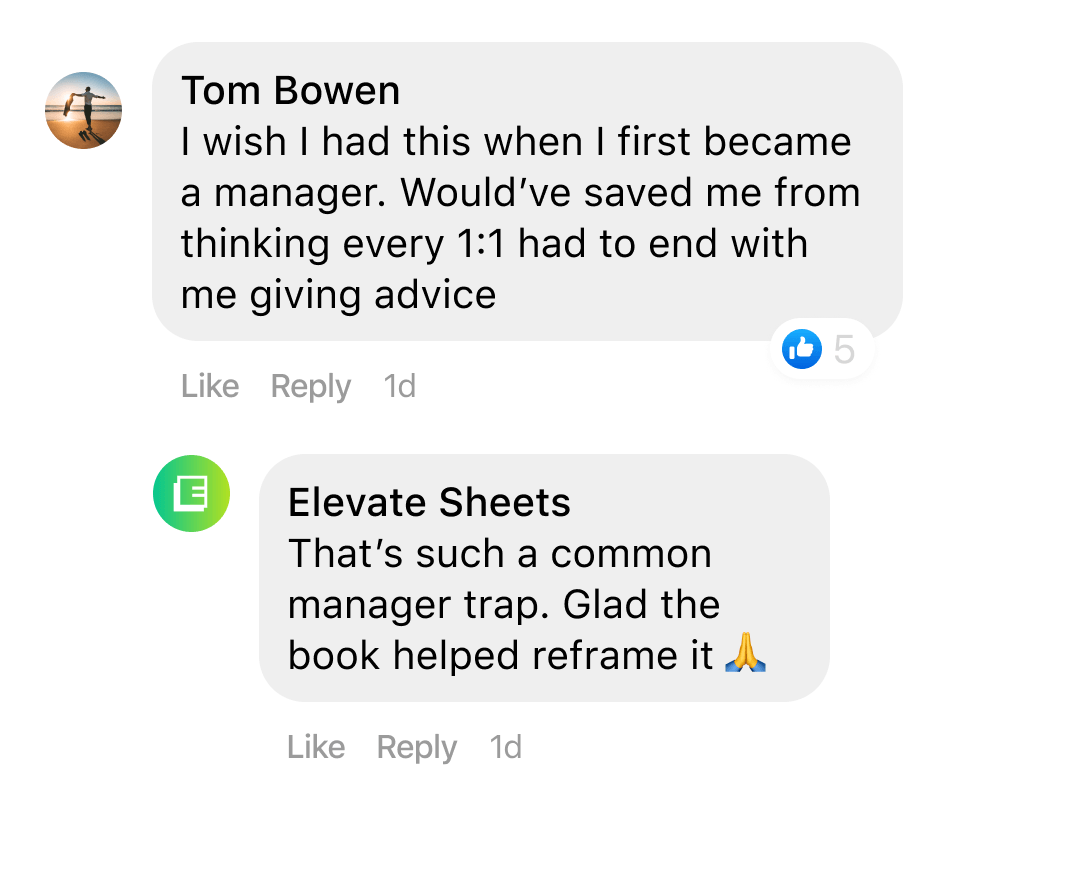
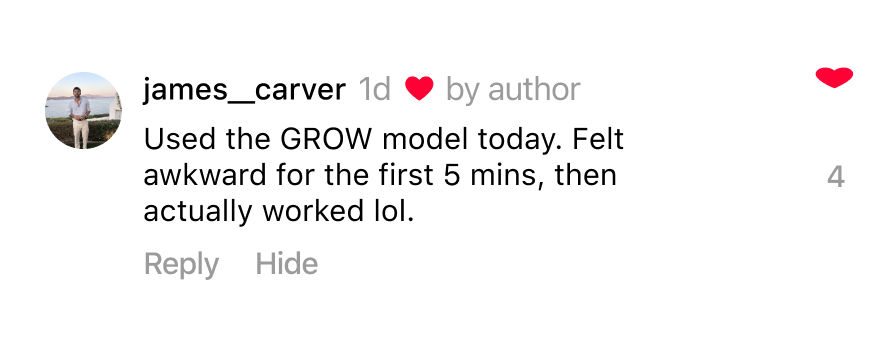
Testimonials 
98.76%
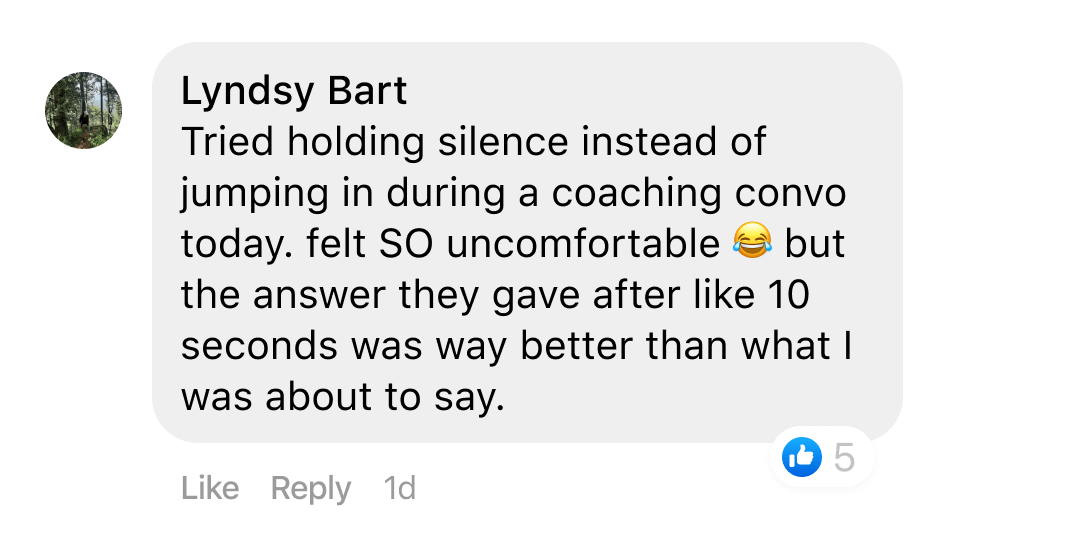
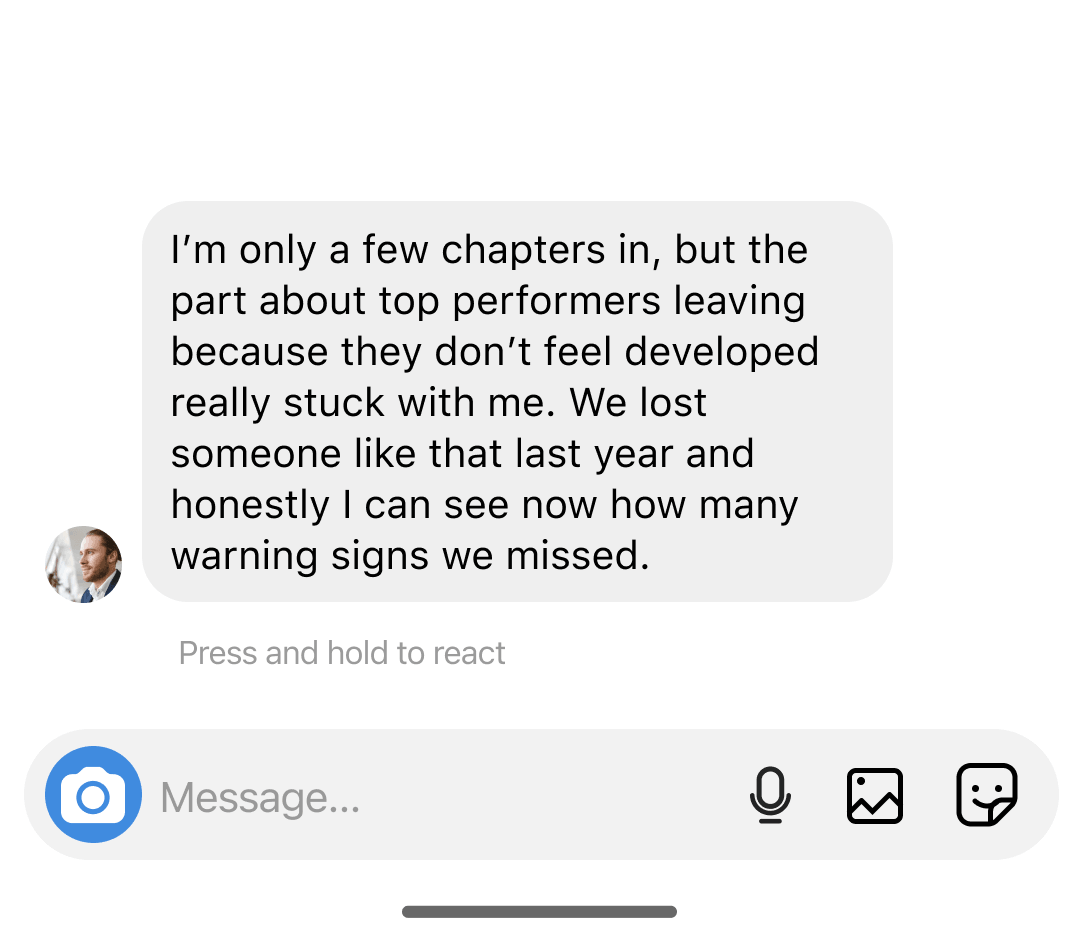
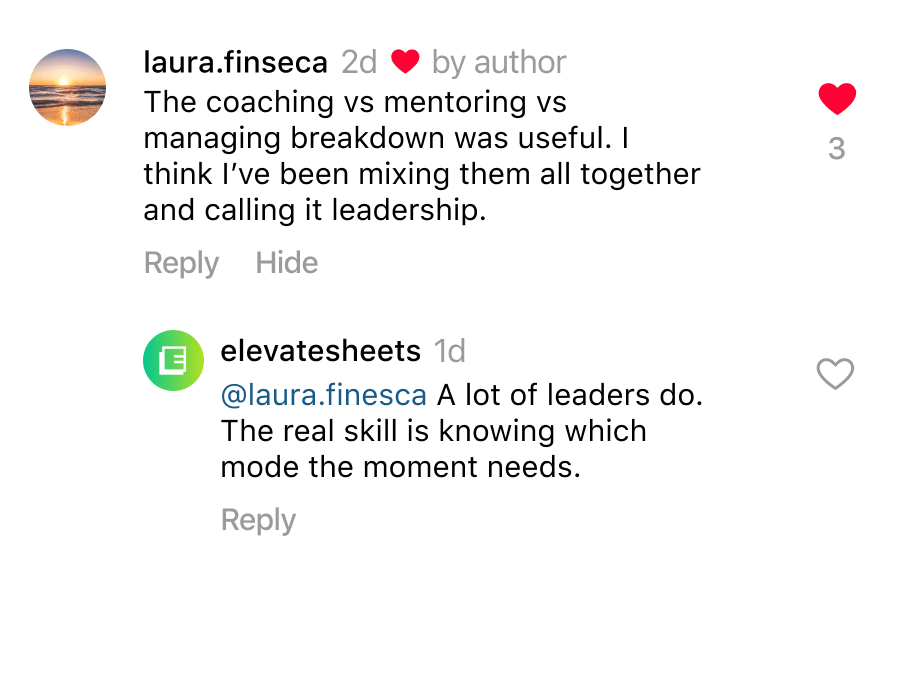
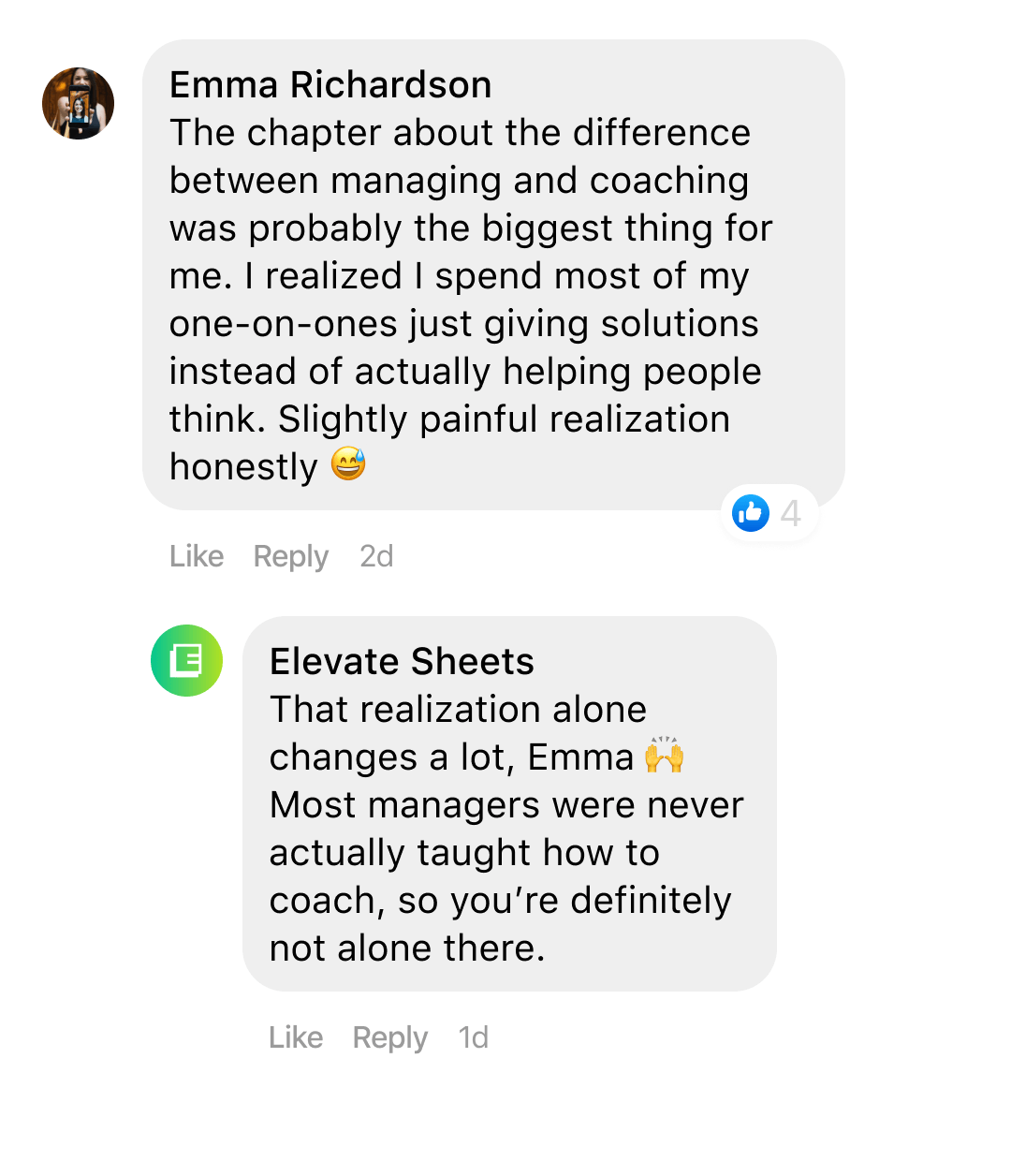
Exceptional feedback from our Success Blueprints readers 
Prime Fall Sale 

ultimate offer
All Products Special
$197 $347
You get all 69 eBooks, Checklists and Tools!
Risk-free Purchase: Full refund within 14 days
Paddle Safe Checkout
Bundle: Success Blueprints
$129 $549
You get all 10 of our high-quality eBooks!
Risk-free Purchase: Full refund within 14 days
Paddle Safe Checkout
 Lowest Price Ever!